
How to use a massage gun: step-by-step guide and mistakes to avoid
A massage gun is one of the most useful tools to relax your muscles after training. Used well, 10 minutes leaves your legs feeling fresh. Used badly, it does very little. Here is everything you need to know.
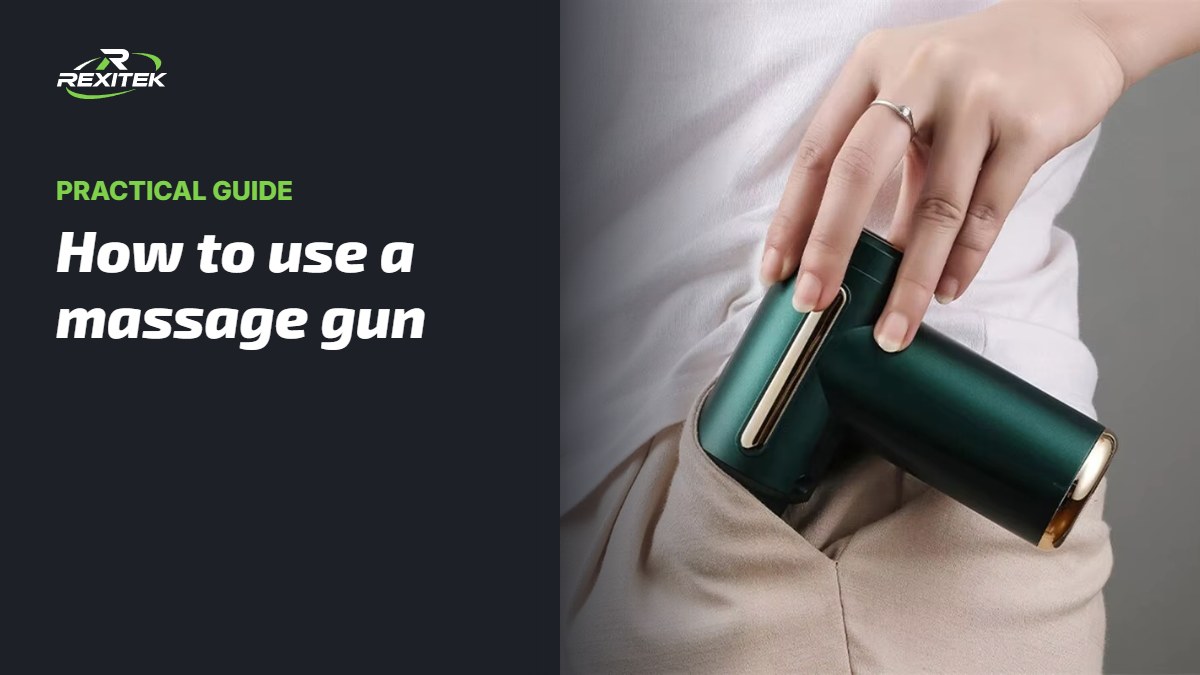
What is a massage gun?
A massage gun (also called a percussion or fascia gun) delivers short, fast pulses into the muscle. That percussion helps relax the muscles and eases the feeling of tiredness and stiffness after exercise or long hours in the same position.
Runners, cyclists and gym-goers use them, but so do people who spend the day sitting at a desk.
Step by step
1. Pick the right head
If you have a mini massage gun with 4 heads:
- Ball: the most versatile. Thighs, glutes, calves and back.
- Fork (U shape): either side of the spine or along the calf, without pressing on bone.
- Bullet: small, specific spots such as the sole of the foot. Use it gently.
- Flat: a softer, more spread-out massage on large areas.
2. Always start on the lowest speed
Switch it on before placing it on the muscle and start gently. If it feels comfortable, go up one level. More power is not better.
3. Let the gun do the work
Do not press hard. Hold it perpendicular to the muscle and glide slowly along it, a few centimetres per second.
4. 1 to 3 minutes per area
That is enough. 1–2 minutes per muscle; up to 2–3 minutes on big areas like the thighs. A full leg session takes less than 10 minutes.
5. Breathe and relax
Keep the area loose and breathe slowly. Massage works much better on a relaxed body.
When to use it
- Before training: 30–60 seconds per muscle at low intensity, as part of your warm-up.
- After training: 1–3 minutes on each muscle you worked.
- Rest days or after a long day: short sessions on the back of the neck, shoulders, back or legs.
Areas to avoid
- The front and sides of the neck. Only use it gently on the back of the neck, or better, use a neck massager designed for it.
- Bones and joints: spine, knee, elbow, ankle, ribs or collarbone.
- Damaged skin: cuts, grazes, bruises or burns.
- The groin and very sensitive areas.
Common mistakes
- Pressing too hard.
- Staying on one spot too long. Keep moving.
- Starting at full power.
- Using it on bone. If you feel sharp knocks, move onto the muscle.
- Forgetting the basics. No tool replaces rest, hydration and sleep.
Full-size or mini?
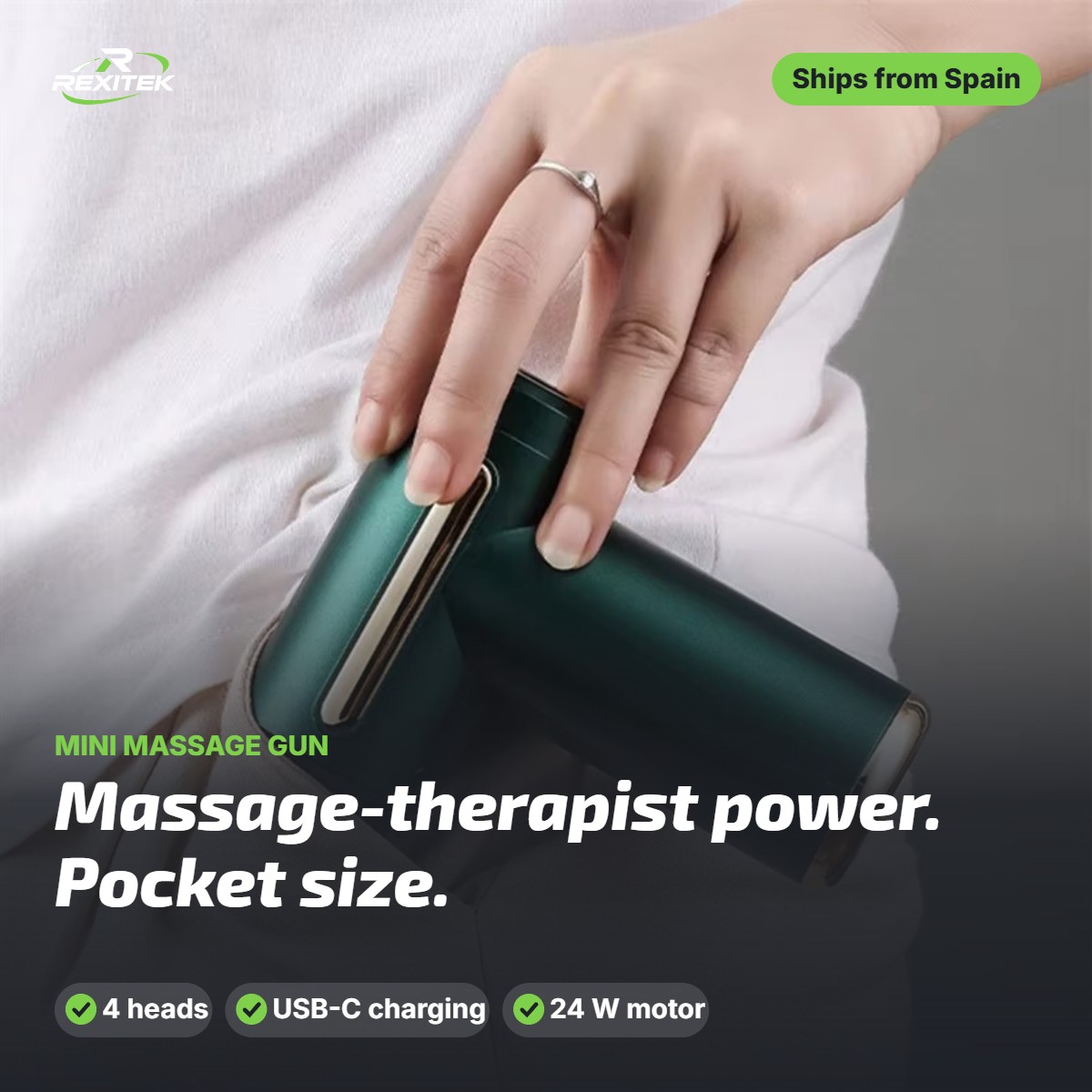
Full-size guns have more power and battery, but they are heavy and bulky. A mini gun fits in your gym bag and works with one hand, so you end up using it far more. Pair it with a spiky massage ball for the soles of your feet.
When to see a professional
A massage gun is a wellness tool. If you have discomfort that does not improve after a few days, a swollen area, a recent knock or any doubts about your situation, check with a physiotherapist or your doctor first.
Products we recommend in this guide

This guide is for information only. Our products are wellness and massage items, not medical devices: if you have an injury or discomfort that does not go away, see a professional.